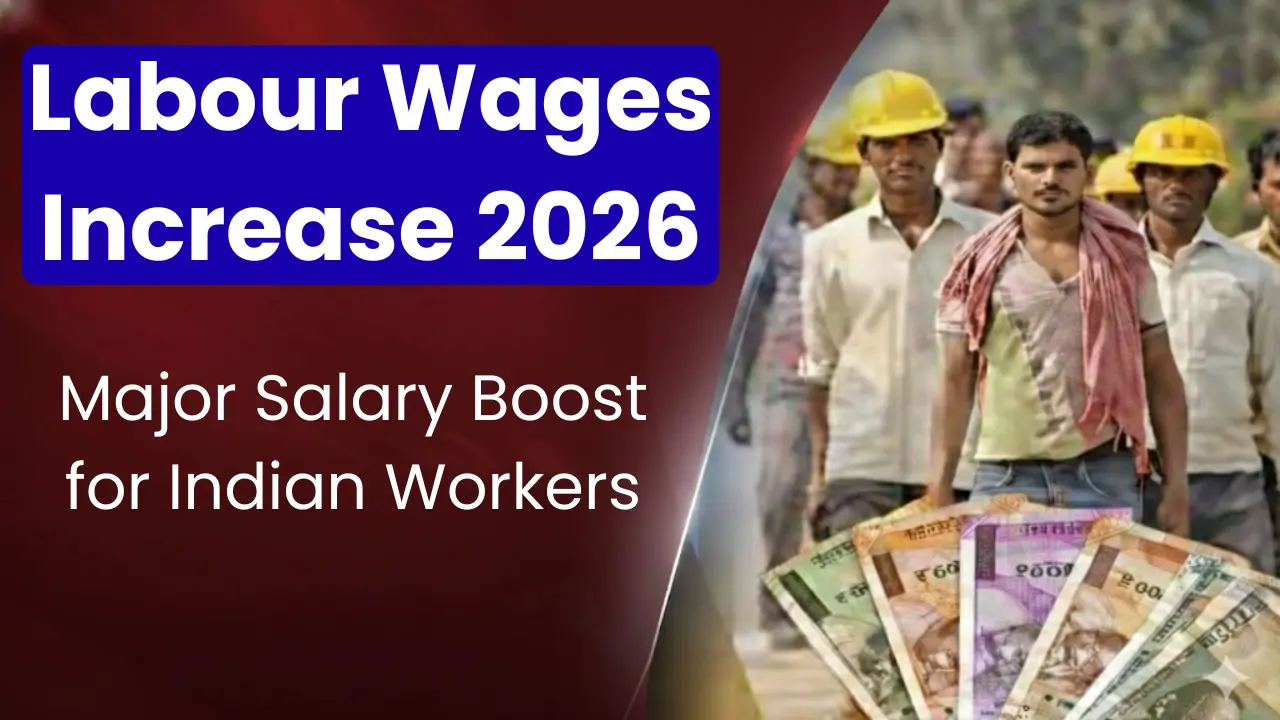
Labour Wages In 2026, labour wage revisions across Indian states are being shaped by the steady rise in inflation, living expenses, and the growing demand for skilled and unskilled workers in sectors such as construction, manufacturing, and services. These changes are not a sudden financial windfall for workers but are mainly designed to protect their purchasing power and help them manage essential expenses like food, rent, and transportation. Since India does not follow a single nationwide minimum wage rate, each state government evaluates its own economic conditions and announces revisions accordingly. The intention behind this step is to maintain a fair balance between worker welfare and the sustainability of businesses so that employment opportunities are not negatively affected while workers still receive reasonable financial support.
Why State Governments Are Increasing Wages
State governments regularly reassess wage structures because economic conditions differ from region to region. Urbanized states with higher consumer prices often revise wages more frequently than rural regions because the cost of living changes faster in cities. Rising prices of groceries, fuel, public transport, and housing have placed continuous pressure on low-income households, making periodic revisions necessary. These adjustments aim to offer relief rather than luxury, ensuring families can continue meeting daily needs without falling deeper into debt. At the same time, governments try to avoid steep increases that could lead to reduced hiring by industries. This careful calibration reflects the effort to support both employees and employers in a balanced economic environment.
Skill Categories and Their Role in Wage Structure
The revised wage system continues to categorize workers into unskilled, semi-skilled, skilled, and highly skilled groups, and each category receives a different minimum pay scale based on training level, productivity expectations, and technical expertise. Entry-level workers often receive the lowest bracket because their roles require minimal formal training, while technicians and experienced professionals fall into higher wage ranges. This structured approach encourages skill development and motivates workers to upgrade their abilities through vocational courses or on-the-job learning. However, access to proper training programs remains a challenge for many individuals, which sometimes keeps them in lower income brackets despite years of experience. Even with this limitation, the classification system aims to create a fair progression path rather than a flat pay structure.
Inflation and Cost of Living Influence
Inflation plays a central role in triggering wage revisions because when prices of essential goods rise, the actual value of daily earnings decreases. Governments rely on consumer price indices and local market surveys to understand how much wages should be adjusted so that workers can maintain a basic standard of living. Although wage hikes offer temporary relief, they may not fully offset the long-term effects of rising costs if inflation continues at a rapid pace. Economists often highlight that wage growth must be matched with productivity improvements; otherwise, small businesses may struggle with higher payroll expenses, potentially leading to reduced hiring or price increases in goods and services. This delicate balance makes wage policy a continuous and evolving process rather than a one-time decision.
Changes in Labour Codes and Salary Components
Recent labour code reforms have introduced clearer rules about how salaries should be structured, especially the share counted as basic pay. A higher basic salary proportion influences provident fund contributions, gratuity calculations, and overtime benefits, which can improve long-term financial security for formal sector employees. While take-home pay might not change drastically, the benefits accumulated over time may increase, providing stronger retirement and social security coverage. Employers, particularly small and medium enterprises, may need to update payroll systems and compliance methods to meet these new guidelines. Worker unions generally welcome these reforms because transparent wage components reduce disputes and ensure statutory rights are protected, although full implementation can vary from state to state and may take time.
Real-Life Impact on Daily Wage Families
For households that depend on daily wages, even a small increase can make a noticeable difference in budgeting decisions such as school fees, healthcare visits, or nutritional improvements. Urban labourers often spend a significant portion of income on rent and commuting, so a modest daily rise can reduce financial stress and improve stability. However, the benefit is closely tied to the number of working days available, as higher rates do not automatically guarantee more employment opportunities. Some contractors may respond to increased labour costs by reducing workforce size or investing in machinery, which can limit the overall income gain for workers. Therefore, predictable and continuous employment remains just as important as wage hikes in improving living standards.
How Workers Can Verify New Wage Rates
When new wage rates are announced, official notifications are usually published on state labour department portals and government gazettes. Workers should check their job category, skill classification, and geographic zone to confirm the correct rate applicable to them. Trade unions, labour offices, and community organizations often provide assistance in understanding these documents and addressing discrepancies if employers continue paying outdated wages. Employers are generally expected to display updated wage charts at worksites, particularly in factories and construction areas, to maintain transparency. Keeping wage slips or digital payment records can also help workers support their claims if disputes arise, ensuring accountability and smoother conflict resolution.