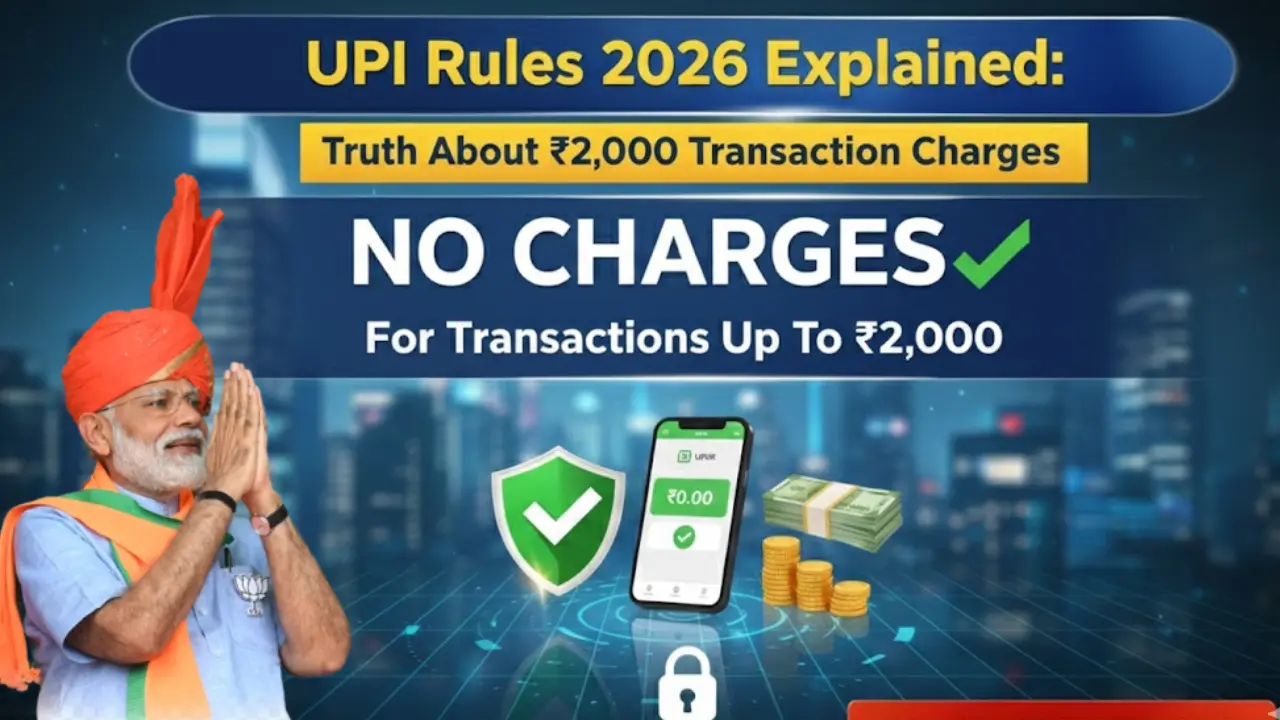
UPI In recent months, conversations about changes to UPI payment rules in 2026 have led to widespread misunderstandings among users. Many people assumed that new charges would be applied to all digital payments exceeding ₹2,000, causing unnecessary concern. However, the reality is much simpler. Most everyday bank-to-bank UPI transfers continue to remain free for customers. The updates mainly focus on operational efficiency and specific merchant-related payment structures rather than imposing direct costs on individual users.
Understanding the Real Focus of the 2026 Updates
The recent changes in UPI rules are largely designed to strengthen the payment system’s infrastructure and improve transaction management. These updates are not intended to introduce universal fees for users. Instead, they focus on how payments are processed when customers use prepaid wallets linked with UPI for merchant transactions. The goal is to maintain system stability while ensuring that digital payments remain smooth and widely accessible across India.
Why the ₹2,000 Threshold Became a Talking Point
The ₹2,000 figure became widely discussed because it is connected to interchange fees applied in certain wallet-based merchant payments. These fees only come into effect when a payment is made through a prepaid wallet to a business and the amount exceeds the threshold. Importantly, this does not affect regular transfers to friends, family members, or bank accounts. The discussion revolves mainly around backend costs for merchants rather than customer expenses.
Full Information Table: UPI Transaction Rules 2026
| Feature | Details |
|---|---|
| Effective Year | 2026 |
| Threshold Amount | ₹2,000 |
| Affected Transactions | Wallet-based merchant payments |
| Bank-to-Bank Transfers | Mostly free |
| Customer Charges | Generally none |
| Merchant Interchange Fee | Around 0.5%–1.1% |
| Daily Transfer Limit | About ₹1 lakh |
| Higher Limit Categories | Up to ₹5 lakh |
| Special Payment Types | Education, healthcare, taxes, insurance |
| Main Purpose | System efficiency and merchant settlement |
What Interchange Fees Mean for Merchants
Interchange fees are small processing charges that may apply when customers pay businesses using prepaid wallets linked to UPI. These fees are not paid by customers but by merchants receiving the payment. The percentage varies depending on the business sector, such as fuel stations, telecom services, or retail stores. These charges help cover operational costs involved in maintaining the payment network and ensuring seamless digital transactions.
Bank-to-Bank Transfers Continue to Remain Free
One of the biggest advantages of UPI is that direct transfers between bank accounts remain free in most cases. Users can continue sending money to friends, relatives, or service providers without worrying about additional charges. This feature remains unchanged in 2026, ensuring that UPI continues to be a convenient and cost-effective payment method for everyday transactions.
Daily Transfer Limits and Higher Payment Caps
Most banks allow users to transfer up to approximately ₹1 lakh per day through UPI. While this limit may vary slightly depending on the bank or app, it remains sufficient for most daily needs. For specific categories such as education fees, medical payments, insurance premiums, or tax transactions, higher limits of up to ₹5 lakh may be permitted. These higher caps support large essential payments while maintaining security controls.
How Wallet-Based Payments Affect Business Costs
When customers make payments using prepaid wallets connected to UPI, merchants may incur interchange fees for amounts above ₹2,000. These charges are typically absorbed by businesses and do not directly reduce the amount paid by customers. Some companies may adjust pricing strategies to manage these costs, but for most users, the payment experience remains unchanged.
System Improvements to Enhance Digital Payment Stability
Apart from financial aspects, many updates in 2026 aim to improve system reliability. Enhancements include better handling of recurring payments, reducing unnecessary balance inquiries, and improving transaction processing speed. These changes help reduce network congestion during peak usage and ensure that digital payments remain fast and secure.
Clearing Up Common Misunderstandings About Charges
Several viral messages have incorrectly claimed that all UPI transactions above ₹2,000 now include extra fees. This information is misleading. Charges apply only in specific cases involving prepaid wallets and merchant payments. Regular person-to-person transfers or bank-based payments remain unaffected, allowing users to continue using UPI without additional financial burden.
What Users Should Remember Before Making Large Payments
To avoid confusion, users should understand the type of transaction they are making. Bank-to-bank transfers are generally free, while wallet-based payments to merchants may involve backend charges for businesses. Knowing this distinction helps users make informed decisions and continue using UPI confidently for both daily and high-value transactions.
Conclusion: UPI Remains Convenient and Affordable
Despite ongoing discussions about rule changes, UPI continues to remain one of the most accessible and user-friendly payment systems in India. The 2026 updates focus mainly on operational improvements and merchant settlement structures rather than introducing new costs for individuals. By understanding how different payment methods work, users can continue enjoying secure, fast, and mostly free digital transactions.